When Robert Wickham was released from prison in 2011, he felt that he had been held captive for long enough. He had not lived a life of true freedom. Since dropping out of high school, Robert struggled with alcohol and drug addiction, losing jobs and ruining relationships along the way.

It is no secret that the last several decades have not been kind to the city of Detroit. Once a thriving center of industry and the undisputed champion of automobile manufacturing, Detroit has seen its population shrink, its unemployment rates skyrocket, and its infrastructure crumble.

By the time he was 21, Jason Hernandez was already serving a life sentence in a federal prison. Arrested for running a 50-person drug distribution ring he inherited when his older brother J.J. was sent to prison, Hernandez figured he would be out and back on the streets within 24 hours.
In just a month, Indiana will be closing one of its minimum security prisons, Henryville Correctional Facility–a move which will hopefully assist the state’s new emphasis on corrections reform.
In 2014, the Indiana House of Representatives passed legislation that reroutes prisoners from state facilities into local jails.

If there was something someone could have said or done that would have changed the path that led you here, what would it have been?
The question is a simple one, yet full of profundity. It is nearly universal in application—who among us doesn’t have a past decision that we lament?
Every race has a finish line. But what happens when that line gets pushed farther out making it virtually unreachable?
That’s how it can feel for men and women entering society after completing their prison term. Though their “debt to society” has been paid, payday never ends since many former prisoners find themselves wading through a “second prison,” further locking them into a life with limited choices.

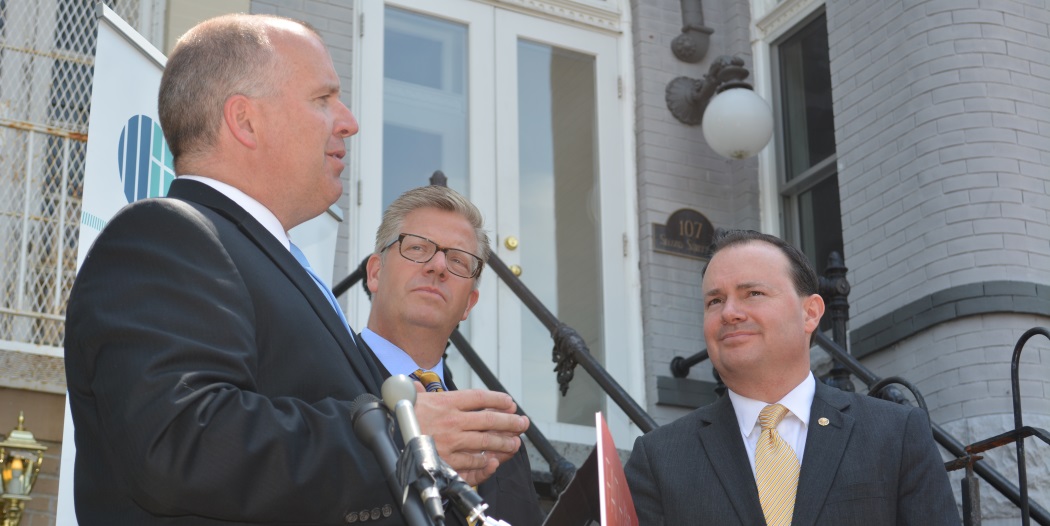
On May 25, mere steps from the Supreme Court Building in Washington, DC, Prison Fellowship announced the launch of the Faith and Justice Fellowship. The new bipartisan collaboration brings together a disparate group of policy makers from various faith traditions, united in a desire to promote restorative values in the criminal justice system.
When it comes to helping prisoners transition successfully to life in their communities, some of the most important work occurs well before these men and women ever leave the correctional facility. In the most recent post to our video blog series, field director Denise Harris talks about some of the great things happening with Prison Fellowship’s intensive, in-prison programming.

“I paid my debt to society. I paid my restitution. I stayed out of trouble. Why is my criminal history always going to be at the forefront of who I am? It doesn’t define who I am anymore. To be brutally honest that bothers me, and hurts me, and worries me, but I can’t crumble.
A significant number of cities in the United States reported an increase in homicide rates in 2015—a disturbing trend that some have claimed marks the end of a period that saw historic reductions in violent crimes in places like New York City and Chicago.
In some ways, the races seemed like any other 5K competitions that take place every weekend across the country. The runners laced up their shoes and stretched in preparation for the run, affixing their bib numbers and hoping for fast times.

In 1994, Congress passed a crime bill that strengthened penalties for drug offenses and earmarked billions of dollars for new prison construction. Prison populations across the country boomed as a result, with recidivism rates remaining high. Drug offenses became the leading reason for incarceration, but prisons nationwide struggled to provide programming capable of breaking the cycle of incarceration, release, and rearrest.
At his graduation from the Assemblies of God Theological Seminary in Springfield, Missouri, John Alarid stood out from his fellow classmates. It wasn’t his height or demeanor that separated him, nor was it something pithy and entertaining written in tape on his graduation cap.
David Padilla knew that he deserved to be punished for the drug dealing of his youth. But he didn’t see how it would benefit the community—or his wife Lisette and their four children—for him to die in prison.
After his third drug-related offense resulted in a life sentence, Padilla set out to become a model resident of the federal prison system.

When Danny Amos left prison, he entered a world that was exceedingly bizarre and foreign to him. Having spent five decades behind bars, Danny had never bought his own clothes, and didn’t even know his size. Something as common to most of us as the automatic doors at WalMart were the source of endless amazement to him.
- « Previous Page
- 1
- …
- 8
- 9
- 10
- 11
- 12
- …
- 14
- Next Page »