-
HOW GRACE LED ONE MAN BACK TO PRISON
A 50-year sentence almost broke him, but grace transformed him.
Smoke wafted through a small home in Crosby, Texas. Music shook the floor beneath Darryl’s feet. He wondered how his older siblings fit so many friends within those four walls. If Mom was at work, they found a way.
Darryl was barely 10, just old enough to wander freely and small enough to disappear in the crowd. He surely wasn’t old enough for the drink someone handed him.
THE HIGH OF BELONGING
He lifted the cup to his mouth, tipping it back the way he’d seen older guys do it, casual and unflinching. Before long, he was holding his next drink. Then another. Soon the room was spinning.
Now, this is something, young Darryl thought.
He’d always been the baby of the family, and now he was one of the guys. It tasted something like belonging.
Darryl was the youngest of 12 children raised in that two-bedroom house in Crosby, just northeast of Houston. Their mother worked two jobs to put food on the table. Darryl wanted to be just like his older brothers, loud and athletic and sure of themselves. Whenever they threw parties, Darryl hovered around, a curious kid absorbing it all. No one told him to leave or to stay.
Growing up poor, Darryl learned to deal with scarcity—with food, personal space, and even attention. If Darryl wanted someone to notice him, he had to act out. Anytime he felt included and important, it was like he’d won a prize.
Not long after Darryl’s first drink, an older kid offered him marijuana. By junior high, Darryl was selling it in school as a way to earn money and, more importantly, recognition.
“He’s the guy,” people would say.
A SHARP TURN
Outside school, Darryl sometimes attended church with his grandmother. But he kept God at arm’s length. Faith in a heavenly Father sounded nice for other people, not for a kid selling drugs to his classmates.
Darryl never knew his earthly father. Then, when Darryl was in eighth grade, his estranged father passed away. When he heard the news, Darryl wasn’t sure how to mourn a man who had abandoned him. Still, his father’s absence left him hollow.
Throughout high school, some coaches and teachers tried to pour into Darryl. They pulled him aside after class, encouraging him to stay on a good path, but their warnings fell flat. Drugs and parties defined his days. It all came to a head in 11th grade when Darryl was caught with marijuana and suspended.
He graduated high school in 1987. His plans mainly consisted of nighttime drives through Crosby and drinking with friends. On one drive, a buddy offered Darryl crack cocaine for the first time.
In a single car ride, Darryl’s life took a sharp turn.
REACHING A DEAD END
Nights blurred into mornings as Darryl stayed on the streets for three or four days at a time, returning home briefly only to vanish again. When Darryl was 18, he became a father. He was barely around to take notice of his daughter.
Darryl sank deeper into his addiction, and his need for approval only grew. He ran with men much older than himself, even as they questioned his choices: “Hey man, you’re young. You shouldn’t be out here on the streets like this.”
Beneath the independence, Darryl masked his isolation. Relatives saw him struggling and suggested he try church, but he waved them off. He still didn’t think he needed God.
His grandmother disagreed. On her deathbed, she warned Darryl’s mother that he would either die in the streets or end up in prison.
Her prediction proved to be true. At age 23, Darryl was arrested for possession of crack cocaine. It was 1991, the height of the War on Drugs; Congress had set vastly different penalties for crack and powder cocaine, and crack carried a particular weight in both the Black community and the courts.
Darryl faced the trial believing he might have a chance to beat the case. The jury sentenced him to 50 years with the possibility of parole. When the verdict was read, something collapsed inside him.
To Darryl, it might as well have been a sentence of eternity. Sitting in the courtroom, he thought, Man, what have I gotten myself into?

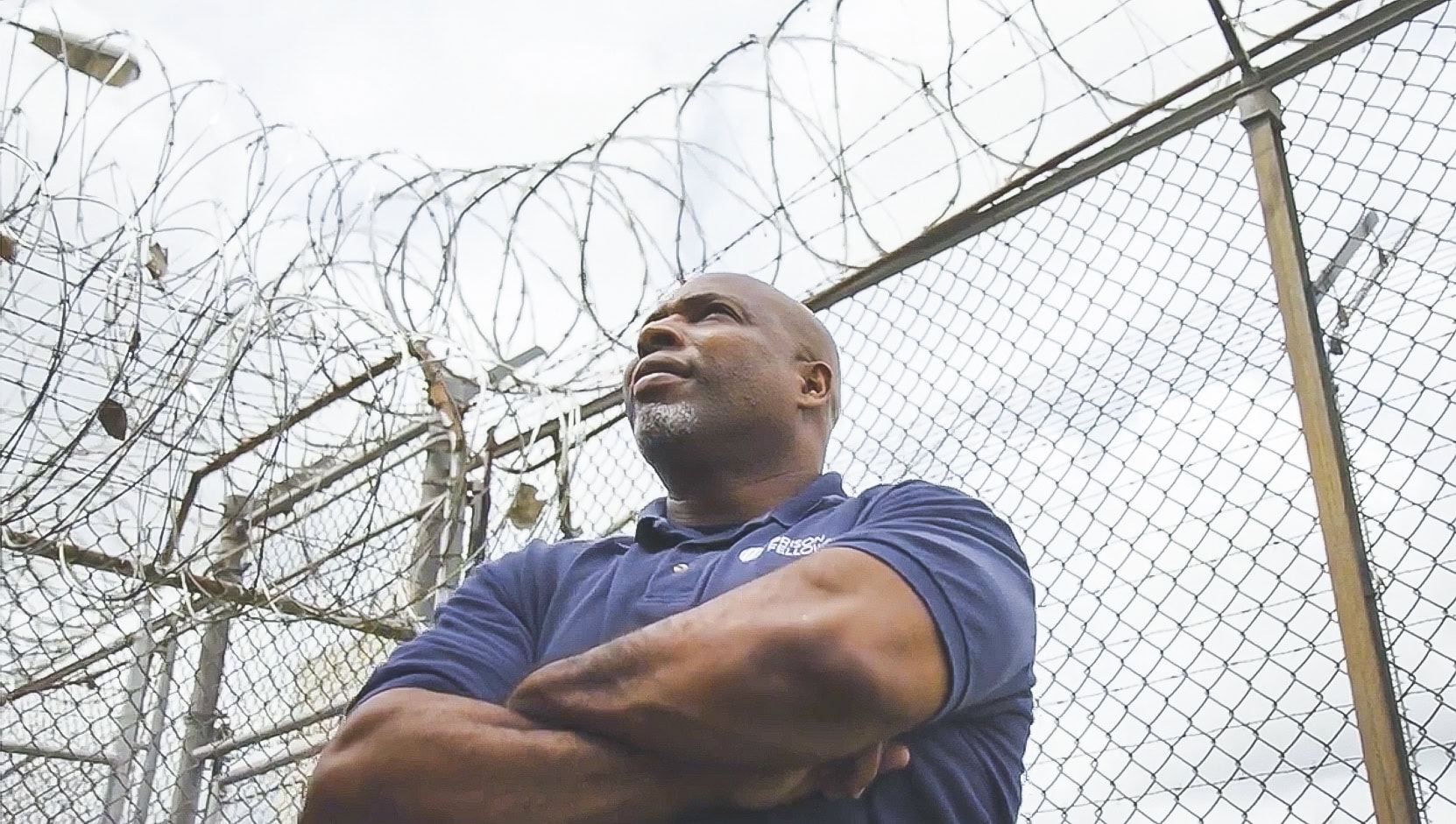
“Man, what have I gotten myself into?”
—Darryl
A PROMISE OF DELIVERANCE
During classification in county jail, Darryl witnessed a murder as the result of a dispute over a cigarette. The man died on the floor. From then on, survival became Darryl’s sole focus and posture.
In prison, Darryl lifted weights to pass the time and be productive, keeping mostly to himself. Though he tended to sidestep most people, he found a friend in his cellmate Randall. Calm and persistent, Randall kept offering Darryl an invitation.
“You need to go to church,” Randall told him.
Darryl dismissed him time and time again. Then a letter arrived from Darryl’s sister. She shared her newfound faith in Jesus. With the letter, she included a single instruction for her brother: Read Psalm 30. Darryl didn’t know what to make of it and showed it to Randall.
“I’ve been trying to tell you, man,” said Randall, “the Lord is trying to deliver you. The Lord is trying to get your attention.”
Not long after, Darryl attended a church service out of curiosity and boredom. That winter night, surrounded by men singing What a Mighty God We Serve, Darryl realized something was changing inside him.
When he spoke the name Jesus, the weight he’d been bearing was lifted—physically, unmistakably. All that remained was a warmth he’d never known before. Darryl walked out of that service with a promise to God: He was done with the life he’d been leading.
A NEW STEP
Faith reordered Darryl’s steps in prison. He quit selling drugs and making homemade wine. He pursued community with other believers, while his former acquaintances thought he’d lost his mind. And in a way, he had. His mind was being renewed.
Darryl joined discipleship classes and dove into God’s Word. He began praying and fasting, sometimes for weeks at a time. His faith deepened, even as he faced the disappointment of multiple parole denials. Each rejection tested him.
Finally, in 1999, the board granted parole on one condition: Darryl would enter the Prison Fellowship® Academy. The department of corrections had seen the Academy’s proven impact in the lives of incarcerated men. Program graduates rarely returned to prison after release.
When he arrived at the Carol S. Vance Unit, fellow prisoners greeted him by name. Volunteers welcomed him without fear. Through restorative community, the Academy revealed who God created him to be. He learned how to parent and how to map out a future. He discovered what it means to build healthy relationships and set boundaries. As he watched married volunteers come in together, whole and peace-filled, he thought, That’s what I want.
In 2002, after serving less than 11 years of his sentence, Darryl was released. By now, his daughter was a teenager. He knew they were like strangers, but he wanted to be the father she deserved.
“I had the desire to be a good dad,” Darryl says. “The Academy gave me the tools I needed.”
Darryl moved in with his sister and her husband. He followed his mentor—a volunteer he had met while in prison—everywhere, from church to meetings to ordinary life. The local church welcomed him without hesitation. That community became a haven for Darryl.
Throughout Darryl’s reentry, old acquaintances tested him, and old temptations reemerged. He struggled to restore trust and reconnect with his daughter. Slowly, they rebuilt their relationship through shared meals and weekend visits, and Darryl learned to show up for her consistently. It was a new frontier for them both.
MINOR MIRACLES
Finding work posed another hurdle for Darryl. He found a job emptying grease trays for a cleaning company and later working as a janitor. Learning new rhythms of employment required discipline he had never practiced, and he made mistakes. He had to relearn how to follow rules and be on time. Good days and small successes felt like minor miracles.
By 2010, Darryl had watched his daughter walk across the stage at her high school graduation. He had married a woman from church and set up a home with her. He grew comfortable sharing his testimony with others, not as a story of shame, but as proof of God’s grace in his life.
Eventually Darryl returned to prison—this time as a volunteer. When the gate clanged shut behind him, old memories rushed back. For a moment, he had to remember he was free.
Since his release, Darryl has continued serving others and making new memories. He had a chance to meet Chuck Colson, Prison Fellowship’s founder, whose own story of incarceration and redemption inspired Darryl. He marveled at Chuck’s approachable demeanor: “When he met you, you weren’t a stranger. He was a down-to-earth man who loved the Lord, and it was amazing to have a chance to meet him.”
Darryl adds, “Not only has my life been impacted. My wife, my children, my community, the state, and nation are being impacted because one individual said, ‘Yes, Lord, I will do what You call me to do.’ And Prison Fellowship was born from that.”
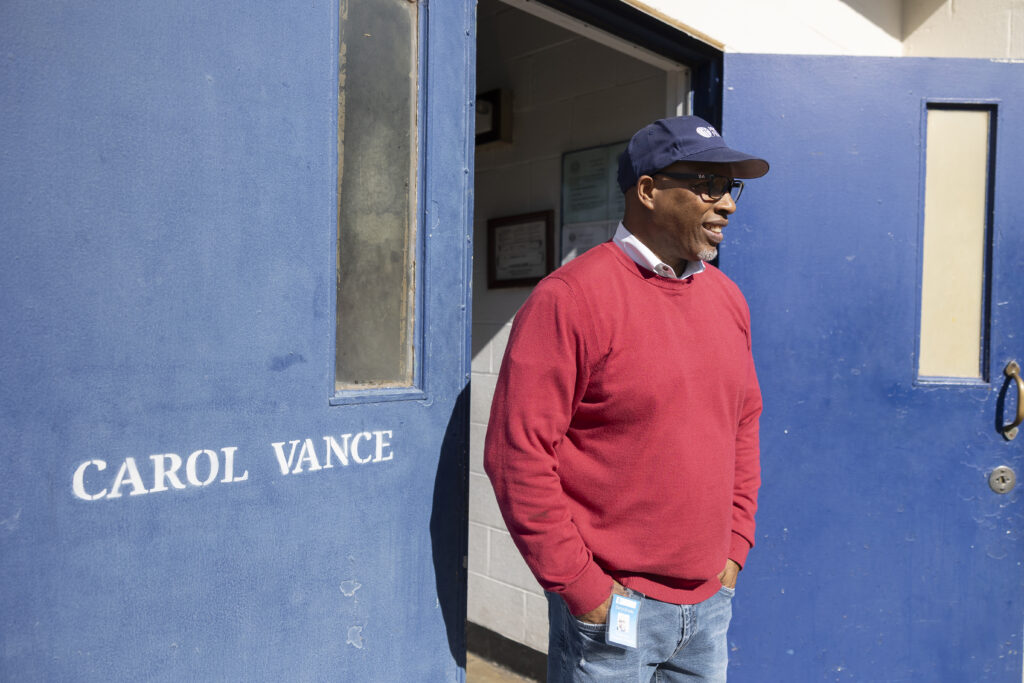
These days, when Darryl returns to Carol Vance, he does so as Prison Fellowship staff. He serves with a brilliant team as Academy program director, leading the very program that rerouted his trajectory for good. He guides dozens of men to embrace new life and second chances each year.
CLOTHED WITH JOY
With the dedication of people like Darryl, the Academy at Carol Vance has become the model for new sites across the country. Many states have welcomed this distinct program in men’s and women’s prisons, with more to come.
On any given day, Darryl walks into the unit as men in white uniforms fill the chapel or the classroom. He greets them by name, exchanging handshakes and words of encouragement. If Darryl walks by any with heads down or arms crossed, he takes notice. “You’re not alone,” he might say. “Focus on the next step right in front of you.”
He remembers the steps that brought him here, only by God’s grace.
“You turned my wailing into dancing;
You removed my sackcloth and clothed me with joy,
that my heart may sing Your praises and not be silent.
Lord my God, I will praise You forever.”
—Psalm 30:11–12