- Advocacy & Reentry
- Angel Tree
- Families of Prisoners
- From the CEO
- Prison & Prisoners
- Prison Fellowship News & Updates
- Second Chance Month
Let's deliver more hope to prisoners, former prisoners, and their families in 2015!
Edwin and his mentor, Rufus.
In 1988, arrested on assault charges, Edwin was forced to abandon his promising career in the military and trade in his army uniform for prison garb.
Looking back on his prison life, Edwin is clear-headed: “When I get asked questions … my standard answer is, ‘All things work together for good … it doesn’t say all things are good.’”
When most people talk about a “prison code,” they likely referring to an unwritten code of conduct amongst prisoners—one that lays out the expectations for how those behind bars are to behave, and one that defines what type of “inmate justice” might result if those rules are disregarded.
This is Benny's dream: helping former prisoners rebuild their lives.
Recently I was speaking at a conference in New York City and leading a panel discussion about men and women coming back to the community.
At a break, as others were filing out to get refreshments, a man came toward me.
Last week, Channel 4 News, WDIV Detroit aired a story about what it's like for these moms to be away from their children for years at a time.
On a recent broadcast of the Missions Radio program, Prison Fellowship President and CEO Jim Liske discusses the work of Prison Fellowship with host Ken Mitchell. During the hour-long program, Liske talks about the church within the prison walls, the importance of ministry to the families of prisoners, and churches creating “communities of restoration” for prisoners when they return to society.

A version of this article originally appeared on the National Fatherhood Initiative website, and is used here with permission. To learn more about the National Fatherhood Initiative, visit www.fatherhood.org.
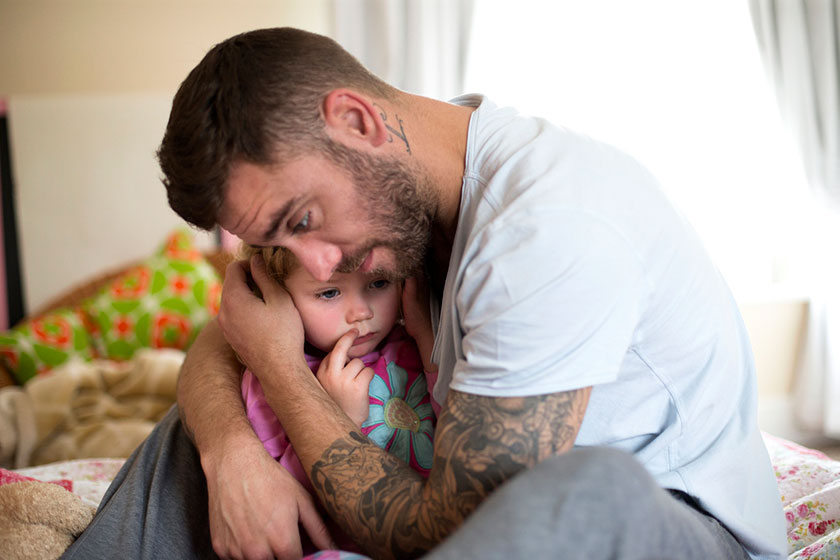
There are 2.7 million children with a parent in prison or jail.
When Israel was almost overcome by surrounding nations, Gideon and his 300 men encircled the enemy camp with torches hidden inside of earthenware jars. On a signal, they broke their jars, began to yell, and let their torches shine forth. The enemy army, convinced they were about to be attacked by a superior force, fled in confusion (Judges 7).
On Tuesday, the case of Holt vs. Hobbs went before the Supreme Court.
The case is brought by Gregory Holt, who is incarcerated in Arkansas and desires to grow a beard in accordance with his Muslim faith. Prison policy in Arkansas prohibits beards for security reasons.
When seeking to improve the effectiveness of our current prison systems here in the United States, it is important to recognize the humanity of those behind bars. So says Prison Fellowship President and CEO Jim Liske in a recent op-ed article for the Huffington Post.
When Gus (a pseudonym) went to prison, Ronald Reagan was president. New episodes of M.A.S.H. were still airing, and Steve Jobs was getting ready to launch the Macintosh personal computer.
But Gus is getting out soon. Understandably, he’s feeling a mixture of fear and elation sometimes known as “gate fever.”
Prison Fellowship works to bring good people back to their communities through restorative programming and dedicated volunteers. In the next three years, Prison Fellowship hopes to position itself in the top 50 urban centers for reentry. Through the development of local reentry networks and local church participation, we can see even more prisoners supported in a successful reentry process, and these former prisoners can go on to help others.
In recent years, California’s prisons have seen intense overcrowding — to the point that federal judges ruled the quality of life in violation of prisoners’ civil rights.
In 2011, Governor Brown introduced a reduction plan that included moving prisoners with nonviolent charges to county jails and probation centers.